The Case for Beautiful Everyday Objects
There is a candle on my desk as I write this. It is in a small ceramic vessel, off-white, slightly textured. It cost more than I would like to admit. It does not technically do anything that a cheaper candle would not do. It throws the same amount of light. It produces about the same amount of fragrance. It melts at roughly the same rate.
But every time I sit down at this desk, my eye lands on it for half a second, and something in my chest settles.
This is the case for beautiful everyday objects, made in one image. They do not do more than the cheaper version. They are not more efficient. They do not last meaningfully longer. They simply, every time you encounter them, give you back a small fraction of attention. They are a quiet exchange between the object and the person who chose it.
We are taught to think of beauty as decoration. Something added on. The frill at the end of the useful thing. I think this is exactly backward. The most useful thing an object can do, after performing its function, is to be worth looking at while it performs it.
The math of attention
A toothbrush gets two minutes of your attention in the morning and two more at night. Four minutes a day, two thousand four hundred minutes a year, roughly forty hours. Forty hours of looking at, holding, and using one small object. Across a lifetime, several thousand hours.
A vase gets less. A wedding ring gets more, but the wedding ring was almost certainly chosen with care. The toothbrush, almost certainly not.
This is the bookkeeping that nobody does. We choose the rare objects, the ones we use occasionally, with enormous care. We choose the constant objects, the ones embedded in every single day of our lives, with no care at all. We pick the wedding ring across six jewelers. We pick the toothbrush off a hook at the drugstore on the way to the register.
If you ran this audit on your home, the conclusion would be uncomfortable. The objects you have chosen with the most love are the ones you encounter the least. The objects you have chosen with the least love are the ones that fill your hours.
What a good object does for you
A good everyday object does three quiet things.
First, it makes the moment of use better. You reach for the linen tea towel and the morning shifts slightly. The cotton mug fits in your hand. The brass pen is the right weight against the page. None of this is dramatic. It is the difference between a sentence and a slightly better sentence.
Second, it makes the room better when it is not in use. The cast-iron pan hanging on the wall. The wooden cutting board leaning against the backsplash. The candle on the coffee table. The objects you have chosen well are also, when not in active use, small pieces of architecture. They build the room without ever asking for the spotlight.
Third, it makes you slightly more careful about everything else. This is the part nobody talks about. When you have a few well-chosen objects in a room, the badly chosen objects start to feel out of place. You begin to notice the plastic. You begin to notice the bad font on the label. You begin, slowly, to upgrade.
I am not arguing that you should spend a great deal of money on every object in your house. I am arguing that you should spend a great deal of attention.
The brands that already passed the test
Aesop made hand soap a thing you wanted to display. Le Creuset made the Dutch oven a sculptural object that lives on the stove year-round. The Lodge cast-iron pan, plain and inexpensive, has been a beautiful object since the 1890s and never tried to be anything else. The Bialetti moka pot is on the cover of cookbooks. The Hario V60 is on the counter of every café you wish was your kitchen.
Each of those objects performs a function. Each could be replaced by a cheaper version that performs the same function. None of them are. They are the objects people choose, on purpose, in full awareness that they cost more, because they want the moment of use to feel slightly better, and they want the room they live in to be the room they actually want to live in.
This is the lineage Polished is trying to join.
Where Polished sits on that shelf
I want to be careful here. I am not claiming Polished belongs in the company of Aesop or Le Creuset. Those are brands that have spent decades earning their place. We are at the start.
But the shelf we are aiming for is the shelf those brands built. The shelf where the candle sits next to the linen towel sits next to the ceramic mug sits next to the leather notebook sits next to, possibly, a small ergonomic toothbrush in a quiet, considered color, with a soft white disc at the center of its diamond-shaped head.
If you have built that shelf in your home, in any room, you already know what I mean. You already understand the quiet pleasure of an object chosen on purpose. You already understand that the cheapest version of a thing is rarely the best version of a thing.
The case I am trying to make, slowly, across this entire journal, is that the bathroom is the room most often skipped on the way to that kind of life. We do the kitchen. We do the living room. We do the bedroom. We get all the way down the list. We arrive at the bathroom and we throw up our hands. We buy the plastic. We close the drawer.
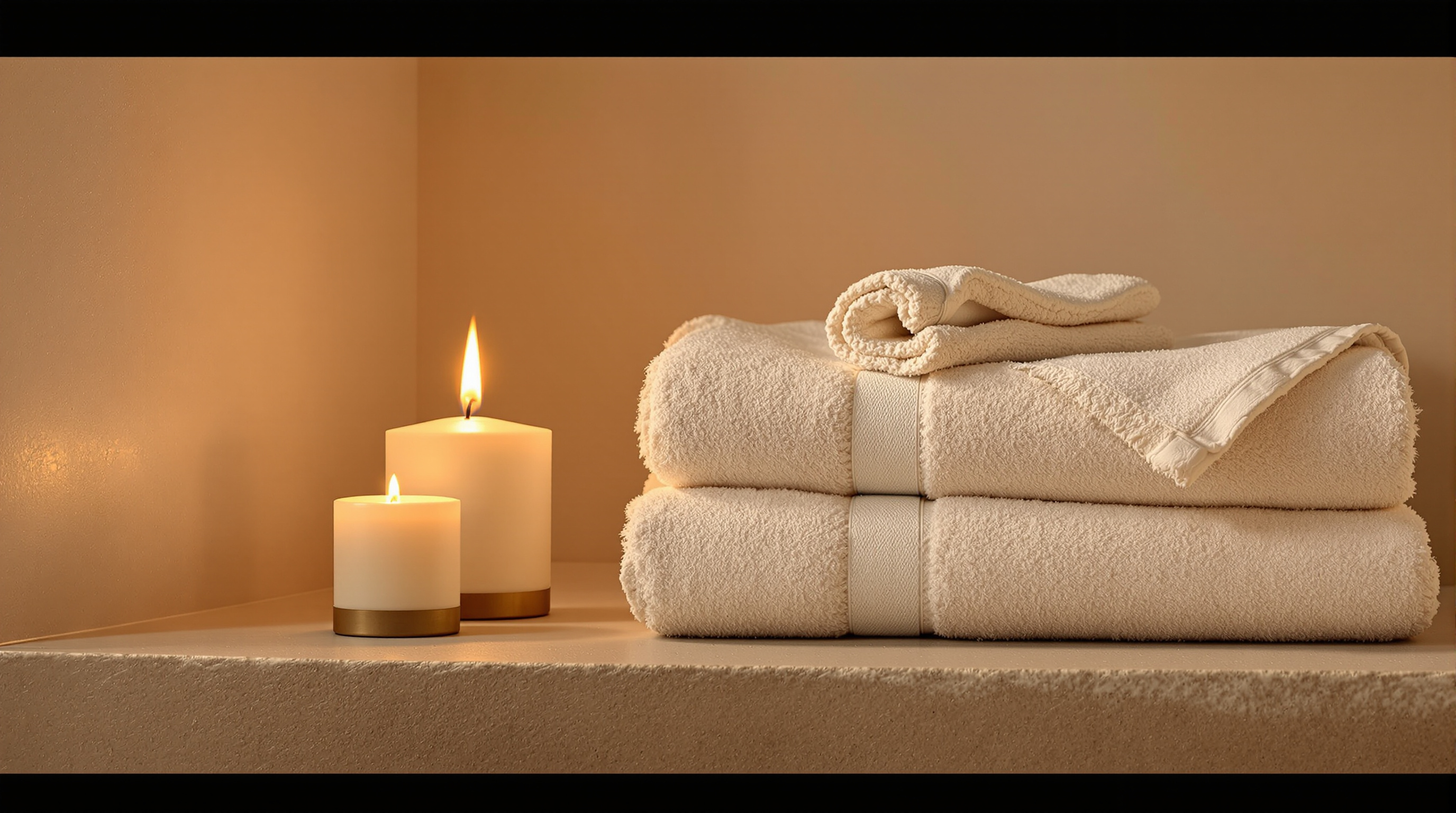
Polished is, at its simplest, an object designed for the bathroom shelf of a person who has already built one of those rooms elsewhere. The candle is on the coffee table. The linen towels are folded by the sink. The hand soap has the apothecary label. There is one shelf left. One drawer.
You know which one I mean.
I’ll see you in August.
Richard