Everything in Your Bathroom Was Designed. Most of It Wasn't Designed Well.
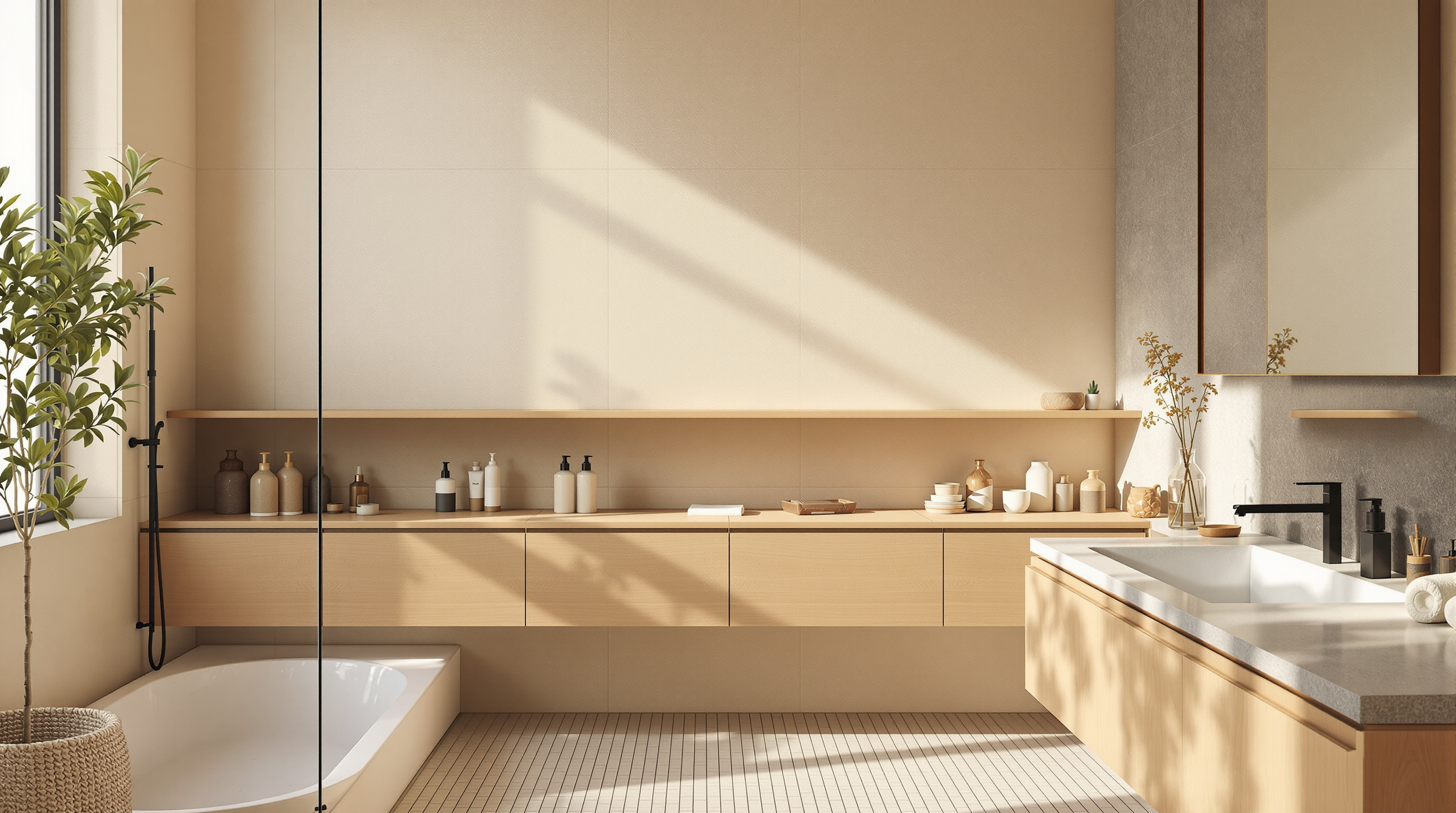
Walk into your bathroom. Stand in the middle of the room. Turn slowly.
Every single object in there was designed. Somebody, somewhere, sat at a desk and decided what shape the faucet should be. Somebody chose the color of the floor tile. Somebody picked the typeface on the hand-soap label. Even the cap on the toothpaste, the one you have flipped open ten thousand times without ever once looking at, was the subject of a meeting at a company you will never visit.
This is the strange truth about modern life. Nothing in your home is accidental. Every object is the result of a choice. Most of those choices were made by people who were not thinking about you, in rooms you will never enter, optimizing for things that have nothing to do with whether the object would be beautiful in your hand.
That last sentence is the entire thesis of this brand.
The two kinds of design
There are two ways to design a small everyday object.
The first way is to ask: what is the cheapest possible version of this thing that will technically perform its function? This is how most of the objects in your bathroom were designed. The plastic toothbrush. The white-and-blue toothpaste tube. The disposable razor with the gum-pink handle. The dental floss container that looks like a tiny first-aid kit. The mouthwash bottle shaped like a chemistry-set beaker. Every one of those objects was the answer to the question, “What is the absolute minimum we can produce and still sell at a profit?”
The second way is to ask: what would it look like if this object was the most beautiful version of itself? This is how the candle on your nightstand was designed. It is how the linen towel folded on your shelf was designed. It is how the hand soap with the apothecary label and the matte ceramic dispenser was designed. It is how every object you would actually point at, when a friend visited, was designed.
The vast majority of bathroom objects were designed the first way. A small handful were designed the second way. Those few objects are why your bathroom feels good when you walk into it on a Sunday morning with a cup of coffee.
Why the dental aisle never got the memo
Here is what I find genuinely strange. Most categories of everyday object have had at least one beautiful brand emerge in the last decade. Hand soap got Aesop and Grown Alchemist and Le Labo. Toilet paper got Who Gives a Crap. The humble bar of soap got Binu Binu and Saturdays NYC. Candles, of course, got too many to count. Even toilet brushes got the small Japanese-design treatment, with brass handles and natural fibers.
The dental aisle did not. Open the dental aisle at any drugstore in America. You will find the same designs that have existed since the 1980s. The same plastic. The same blister packaging. The same hyperactive marketing copy. The same promises about whitening and gum health and angled necks. Every brand competing on incremental functional claims. None of them competing on whether the object is beautiful.
This is not because dental hygiene is uninteresting. Hand soap is also functional. Toilet paper is also functional. Candles are, depending on your view, completely functionless. Somehow each of those categories produced a beautiful brand. The dental category produced, in the last thirty years, an electric toothbrush shaped like a corded power tool, and an enormous number of plastic sticks in slightly different colors.
I think the reason is straightforward. The dental category is large and consolidated. A handful of huge companies dominate it. Those companies built their factories and supply chains around a specific kind of plastic stick, and once you have built a factory around a thing, the factory becomes the reason the thing keeps existing in that shape. The shape is not the answer to a design question anymore. The shape is the question.
What gets to live on the shelf
Look at the objects in your home that you have chosen to leave out. The candle on the coffee table. The ceramic mug on the counter. The wood cutting board leaning against the backsplash. The brass bowl on the entry console.
Now think about the objects you keep hidden. The plastic broom in the closet. The corded vacuum behind the door. The hairdryer in the cabinet under the sink. The toothbrush in the drawer.
The line between the two groups is not function. Brooms are functional. Toothbrushes are functional. Candles, again, are not. The line is design. Objects that were designed well get to live on the shelf. Objects that were not get hidden away. We carry around the embarrassment of badly designed objects by tucking them out of sight.
Polished is, at its heart, an attempt to move one specific object from the hidden drawer to the open shelf.
The bar for an everyday object
I have a small bar I have started to use when I think about whether an object is worth keeping. Three questions.
One, would I pick this object up and feel pleased? Not impressed. Just quietly pleased. The way you feel when you hold a good pen.
Two, would I leave it out where guests could see it? Not to show off. Just because it does not bring the room down.
Three, would I miss it if it broke? Would I think about replacing it the way you think about replacing a friend’s birthday gift you accidentally chipped?
Almost every object in your bathroom fails all three. The shampoo bottle. The plastic cup. The disposable razor. The deodorant tube. The toothbrush.
This is not a small problem. This is the architecture of your most private room, and somebody else built it badly on your behalf, and you have been living inside their mistake.
Where this goes
I am going to spend this entire journal making one quiet argument. The argument is that the everyday objects we use most deserve the same level of design attention we give to the objects we use rarely. The candle that comes out three times a year is not more important than the toothbrush you use seven hundred times. It is, by the math of attention, almost certainly less.
So next week I am going to write about candles, and linen, and a few other objects that already passed the test. I want to put Polished in the right room before I show it to you head-on. I want to make the case for the room before I make the case for the object.
This is, I admit, the long way around. But the dental aisle has been the dental aisle for forty years, and changing one shelf in it is going to take more than a clever ad.
It is going to take a quiet argument. And a few hundred people who agree.
Thanks for being here for the start of it.
Richard